🎵 为什么分享这首歌
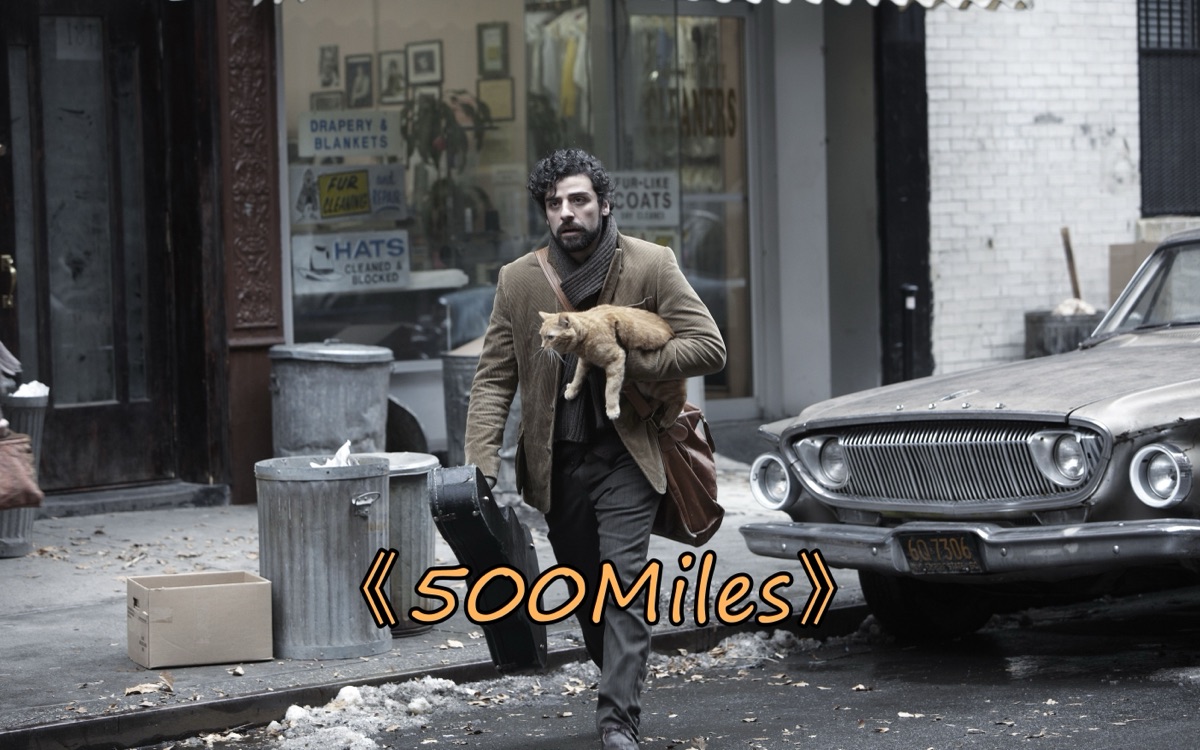
美国民谣经典,这版来自科恩兄弟电影《醉乡民谣》(Inside Llewyn Davis),三个人和声,一把吉他,干净又苍凉。讲一个离家五百英里、身上没钱没衣裳、回不去的人。
学英语的角度:歌词简单重复、朗朗上口,而且藏着两个超实用的「穷」的习语——not a penny to my name、not a shirt on my back,听完就会用。
📝 歌词 Lyrics(节选)
If you miss the train I’m on, you will know that I am gone You can hear the whistle blow a hundred miles A hundred miles, a hundred miles, a hundred miles, a hundred miles You can hear the whistle blow a hundred miles
Lord I’m one, Lord I’m two, Lord I’m three, Lord I’m four Lord I’m five hundred miles from my home
Not a shirt on my back, not a penny to my name Lord I can’t go back home this a-way
完整歌词见 Genius - 500 Miles。
🔤 重点词句
- miss the train I’m on — 错过(我坐的)这趟车。the train I’m on 是省掉 that 的定语从句。
- you will know that I am gone — gone 在口语里就是「走了 / 不在了」:He’s gone.
- hear the whistle blow — hear + 宾语 + 动词原形(感官动词后接不带 to 的不定式):听见汽笛响。同结构:I heard him sing.
- a hundred miles — 一百英里(1 mile ≈ 1.6 公里)。five hundred miles 离家五百英里。
- Lord I’m one, Lord I’m two … — Lord = 天哪(感叹词);这里是一路数着里程碑越走越远。
- not a shirt on my back — 习语:穷得身上没件像样的衣服,引申为「一无所有」。
- not a penny to my name — 习语:名下一分钱也没有。形容「一穷二白」极常用。
- this a-way — this way(这样)的口语拉长唱法;a- 前缀在民谣里常见(如 a-hunting)。
- go back home — 回家。go back home 比 return home 更口语。
🗣️ 发音与连读
- whistle → /ˈwɪsəl/,注意 t 不发音(silent t),只发 /səl/。
- hundred miles → 连读 /ˈhʌndrəd maɪlz/,中间的 d 弱化、几乎听不出。
- penny to my name → 一气呵成,to my 连读 /tə maɪ/。
- this a-way → 把 way 拉长,唱出漂泊感。
- Lord → /lɔːrd/ 拉长,当感叹用,有点像叹气。
💬 讨论点(语音群聊用)
- Five hundred miles from home. — How far are you from your hometown right now? Miss it?
- Not a penny to my name. — Have you ever been that broke, or started over from nothing?
- Why do you think a song about leaving home touches people everywhere?
✍️ 我的笔记
最爱两个「穷」的习语:not a penny to my name(名下一分钱没有)和 not a shirt on my back(穷得精光),比 I’m very poor 生动一百倍。还有 hear the whistle blow 这种 hear + 动词原形 的用法,感官动词后面不加 to,下次想说「听他唱歌」直接 heard him sing。